
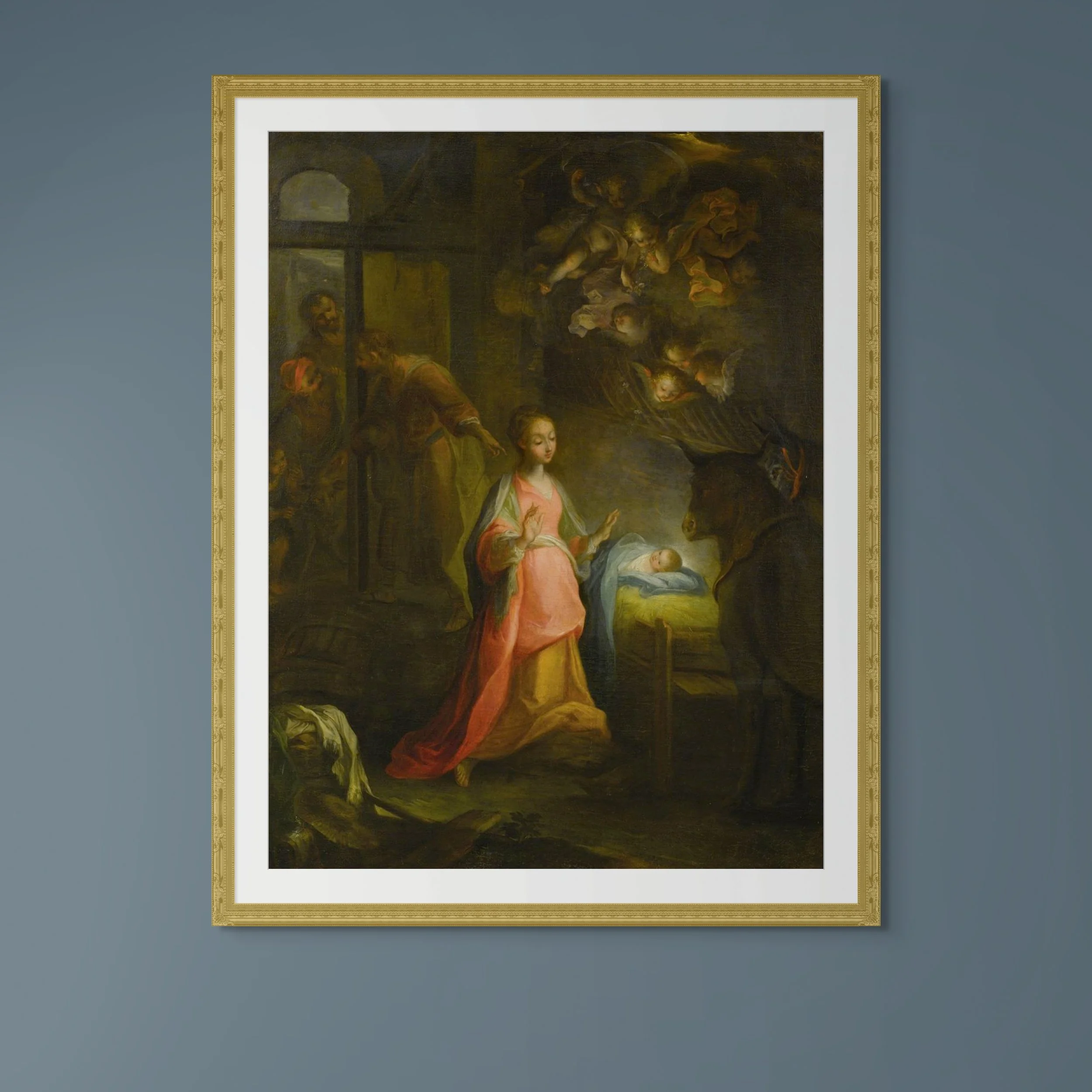
The Nativity
Federico Barocci, c. 1597
Oil on canvas
Scripture
“And she gave birth to her firstborn son and wrapped him in swaddling clothes and laid him in a manger, because there was no room for them in the inn.”
— Luke 2:7Meditation
In the stillness of night, light breaks forth—not from torches or stars, but from the face of an Infant. Barocci’s Nativitydraws us into the hush that follows divine arrival. Mary kneels in adoration, her hands poised in reverent wonder, her gaze fixed on the fragile form of her newborn Son. The folds of her rose and gold garments seem to pulse with warmth, echoing the interior fire of maternal love and divine awe.
The ox and donkey, silent witnesses, embody creation’s humble recognition of its Creator. A tender blue glow surrounds the Christ Child, suggesting that heaven itself has bent low to illuminate the earth. In the upper register, angels cascade through the darkness, their swirling forms mirroring the rising of prayer and praise that the whole cosmos now joins.
Barocci captures what words can barely hold: the meeting of heaven and earth in a moment of utter simplicity. This is not the glory of kings, but the quiet triumph of grace entering human poverty. The newborn Child is wrapped not only in swaddling clothes, but in light—the same light that seeks to wrap our own hearts in peace.